Ox-Bone Broth as the Whole Argument
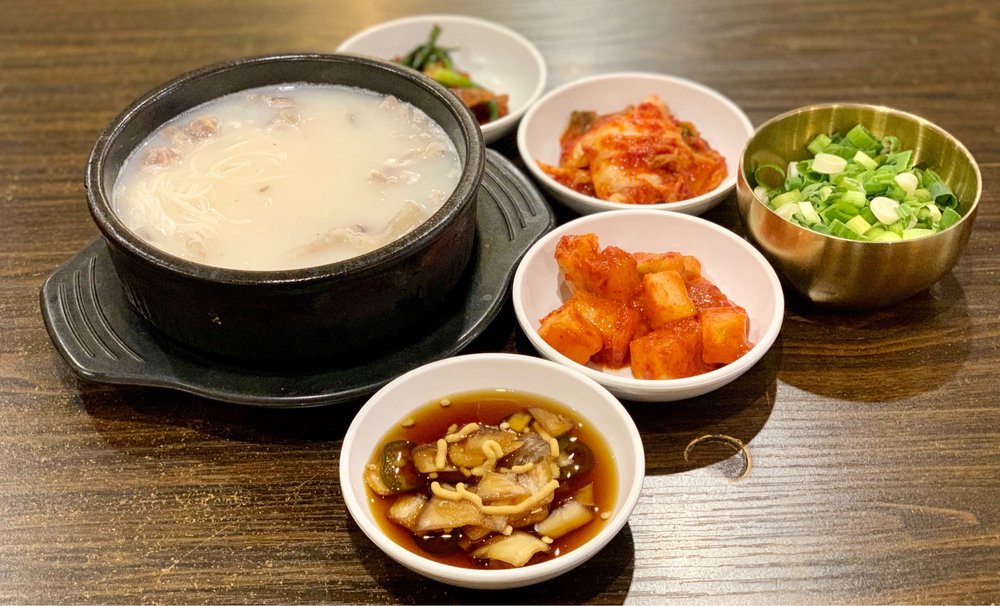
Doma Seolleongtang stakes its name on a single discipline: the long, slow simmer of ox bones into seolleongtang, the milky-white broth that defines Korean comfort cooking. The kitchen treats that broth as the whole argument. It arrives unseasoned and clean, a blank canvas for the table salt, scallion, and rice that turn it into a full meal, and the restraint is the point. Galbitang widens the range, a clearer beef short-rib soup with more obvious richness, while the sullungtang keeps the house focused on the bone-broth tradition rather than chasing a sprawling menu. The banchan that lands alongside each bowl does real work here, the small dishes of kimchi and pickles cutting the warmth of the soup and giving the meal its rhythm. This is everyday Korean cooking built for the people who grew up on it, the kind of room that fills with regulars looking for a restorative bowl after a long day or a rough morning. The setting is casual and family-minded, with none of the polish or markup that a trend-driven Korean concept would carry. Prices stay modest, which fits the food: this is sustenance, not spectacle. Dallas has no shortage of Korean barbecue rooms built for groups and grilling, and Doma Seolleongtang reads as the deliberate counterpoint, a soup house that asks to be judged on broth alone. Beef cheek finds its way into the deeper bowls for those who want more chew, and the kitchen handles those cuts with the same patience it gives the bones. What holds the room together is consistency, the sense that the same careful broth waits on a Tuesday as on a weekend. For a city that prizes its steak and its smoke, a clean bowl of seolleongtang is its own quiet Dallas comfort.